
Medina Council Shifts Sidewalk Repairs to City, Advances Deer Management Plan
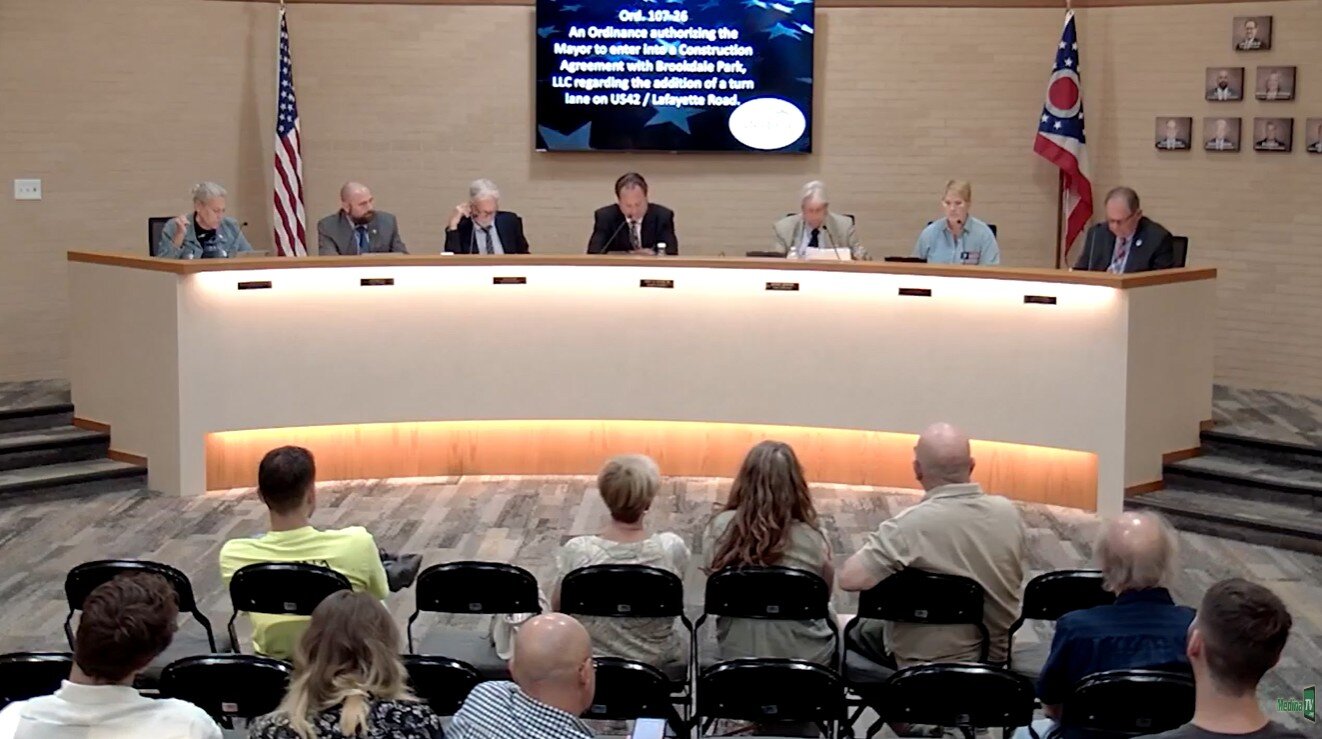
Medina City Council took action on seven pieces of legislation during its Monday, July 13 meeting, most notably a sweeping deer management program and a new policy that puts the city in charge of sidewalk repair and replacement.
Comprehensive Deer Management Program Approved
Council President John Coyne III said the ordinance began as a simple update to the city’s existing deer abatement rules but grew into a much broader plan after months of work with the parks department, police department and the mayor.
The plan keeps Medina’s archery program, which harvested more than 100 deer last year. It adds a sharpshooting program that will run between January and March, after archery season ends, with a goal of removing about 200 additional deer. Coyne noted that 142 deer were killed by vehicles in the city last year.
Residents will be able to sign up by email to be notified when hunts are scheduled. The city also plans to add signage in areas with frequent deer crossings and to look at replacing native plants that have been wiped out by the deer population.
Coyne said the city hopes to set up a program allowing residents, and people from outside Medina, to request donated deer meat once it has been processed. Meat that is not claimed would go to local food organizations rather than go to waste.
Council Member Bill Lamb, who worked closely on the plan over the summer, said it will take several years, comparable to programs in other communities that have taken five to eight years, before the deer population reaches a more manageable level. He credited the parks director, police chief and mayor for their cooperation.
A council member who chairs the committee that developed the plan thanked city staff for tracking data throughout the process and said residents should expect to see results, though it will take time.
The ordinance passed 7 to 0 with an emergency clause attached, meaning it takes effect immediately.
Sidewalk Repair Becomes a City Responsibility
Council also approved a new ordinance rewriting Chapter 905 of the city code covering sidewalks, curbs and gutters. The change was the product of months of work by the Streets and Sidewalks Committee.
Under the previous code, residents were responsible for maintaining, repairing and replacing the sidewalks in front of their own properties. The new ordinance shifts that responsibility to the city, which Coyne described as a public asset used by the entire community.
Coyne said the city has more than 200 miles of sidewalk and that damage is usually caused by tree roots, storm sewers or other utility lines rather than resident neglect. The city plans to use grinding equipment to smooth out smaller trip hazards and to replace sidewalks in worse condition over time.
Residents will still be required to shovel snow from their own sidewalks and keep them clear of items such as toys, according to the ordinance.
One council member raised concerns during discussion, saying a review of sidewalk ordinances from 18 other communities showed that most cities help residents with repairs rather than fully assuming the cost. That member argued sidewalks should remain a resident expense, similar to routine home maintenance, and said covering the cost indefinitely was hard to accept.
Coyne responded that differing opinions among the seven council members are part of the legislative process.
The ordinance passed 6 to 1, with Council Member Chet Simmons opposed. The emergency clause attached to the ordinance also passed 6 to 1.
Voters Will Decide on Expanding Road Fund to Cover Sidewalks
A separate ordinance will ask Medina voters in the November 3 general election to expand the allowed use of the city’s dedicated 0.25 percent income tax fund, commonly called the 108 Fund, to include sidewalk repair alongside its current uses for streets, storm water and utility work.
Law Director Gregory Huber explained that voters approved the 0.25 percent set aside in 2006 for streets, utilities and storm water, but sidewalks were not included at that time. He said the ballot request would not raise the city’s overall income tax rate, which remains at 1.25 percent.
During discussion, one council member asked whether adding sidewalks to the fund would force the city to cut its concrete street repair budget in half to cover both priorities. Finance Director Keith Dirham said the amount spent from the fund varies year to year depending on which projects are underway and what grants become available, and that the city typically carries a balance because it lacks the staff to spend the full amount annually.
Huber asked council to pass the measure subject to his final review, since he wants to adjust a few provisions in the draft language before it goes to voters.
The ordinance passed 6 to 1, with Simmons again opposed, as did its emergency clause.
Council Approves Brownfield Grant Consulting Agreement
Council authorized Mayor Jim Shields to enter into a professional services agreement with T&M Associates for consulting work tied to an Ohio Department of Development Brownfield Remediation Program assessment grant for the South Elmwood parking lot project.
A city official identified as Marshall told council the agreement, already reviewed and approved by the law director, carries a grant total of $242,360 and requires no matching city funds. The money comes from a $1 million pool set aside for Medina County, though the city’s original request for $300,000 was reduced after another project received a larger share.
The emergency clause was requested so work could begin quickly as the city works with hotel developers on redevelopment plans for the lot.
The ordinance and its emergency clause both passed 7 to 0.
Routine Business and Budget Items Pass Unanimously
Council also approved several housekeeping measures without extended debate.
An ordinance clarifying Teamsters contract language in the city’s salary and benefits code passed 7 to 0. A separate ordinance authorizing the finance director to make fund advances tied to a Brownfield grant also passed 7 to 0, as did an ordinance amending the 2026 budget to reflect account changes in the municipal court.
Council additionally approved a resolution supporting a letter Dirham sent to the Medina County Budget Commission regarding the city’s Emergency Medical Services fund. Dirham said new state legislation gives county budget commissions more oversight of local government reserves, and he wanted to document the reasons behind the city’s fund balance ahead of any review.
Coyne said he was concerned about the possibility of commissions across the state pushing cities to reduce levies based on current balances, noting that Medina budgets five years ahead and that cutting revenue streams could disrupt long range planning.
The resolution passed 7 to 0.
Council Members Share Community Updates
Several council members used their comments to highlight recent community events and ongoing projects.
One council member asked residents to thank police officers when they see them and noted the department’s efforts to keep the community safe. The same member highlighted the Free Clinic of Medina County, which provides medical care to working residents who cannot afford insurance but do not qualify for Medicare or Medicaid. The clinic is led by Executive Director Nancy Peacock and founder Dr. Kim Bowen, a retired emergency room physician.
That council member also praised a Fourth of July weekend event at Old Town Graveyard organized by the Friends of the Cemetery, which honored three Revolutionary War soldiers buried there.
Council Member Haire thanked city employees for their work, including recent water main repairs, and asked residents to check on neighbors during periods of high heat, particularly those without air conditioning.
A council member recalled watching the television show “Emergency!” as a child and used the moment to recognize the recent death of actor Randolph Mantooth, who played paramedic Johnny Gage on the series, while thanking Medina’s own emergency medical staff for their work.
Council Member Isabella addressed resident questions about the city’s license plate reading camera system, saying Police Chief Edward Kinney has expressed confidence in the technology’s effectiveness and privacy safeguards.
Lamb outlined several projects he is pursuing, including a native plant restoration effort in city parks to address damage from deer overpopulation, a rotating sign program to reduce deer related vehicle crashes, infrastructure improvements along West Washington Street in the historic district, a proposed exemption to the city’s lawn mowing ordinance for defined native landscaping areas, and research into quieter wayside horn technology for railroad crossings.
Haire closed the meeting with a reminder that the Medina County Fair runs August 3 through August 9, with a main concert Wednesday evening and tickets available online or at the fair office on Smith Road.
Frequently Asked Questions
