
Ravenna Council Meeting: Weighs Safety Center Levy, NDS Housing Debt, and Data Center Bans
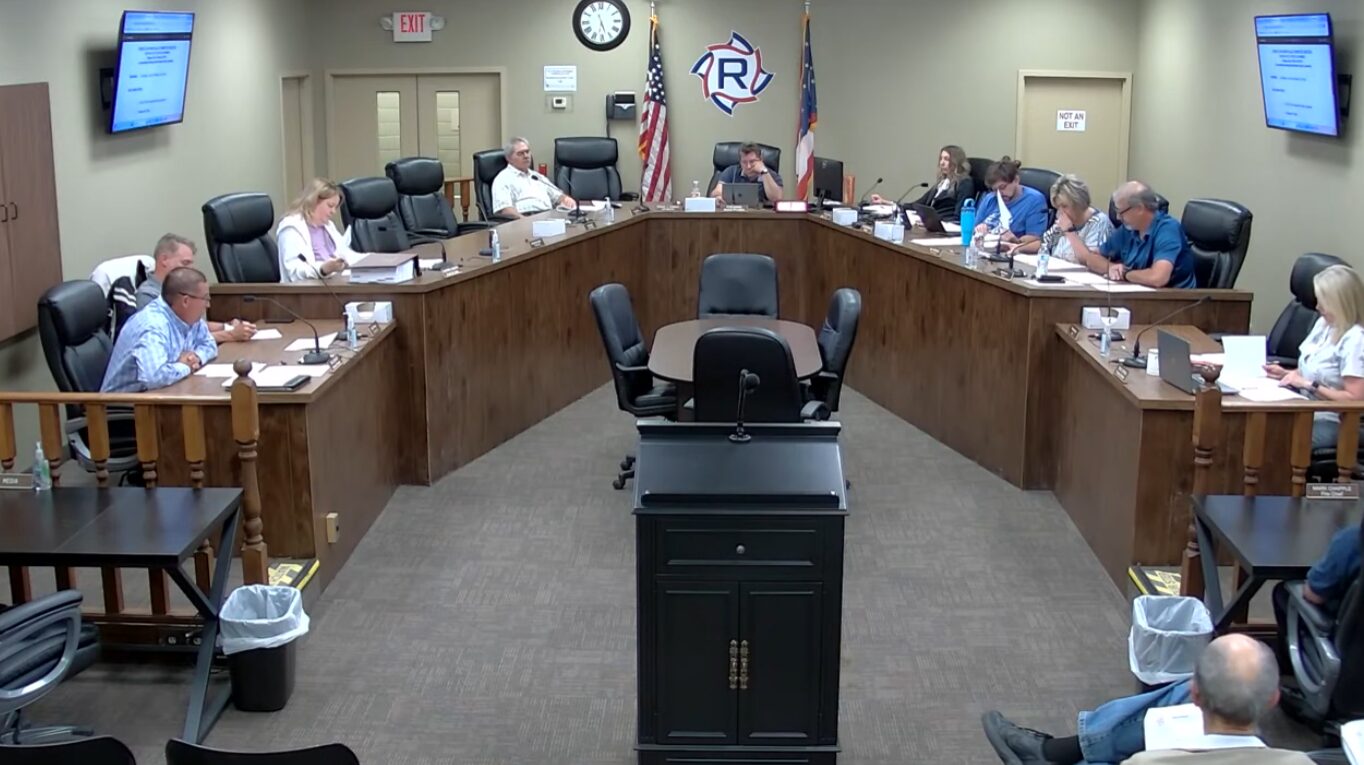
The Ravenna City Council met for a series of intensive committee discussions to chart the city’s legislative and fiscal course for the upcoming year. Dominating the agenda were critical decisions regarding the timeline to resurrect a failed safety center income tax levy, a request to forgive hundreds of thousands of dollars in affordable housing debt, and an aggressive stance on regulating data centers and cryptocurrency operations in Northeast Ohio.
Resurrecting the Safety Center Levy for November
Setting the Ballot Strategy for the Ravenna Safety Center Project
Ravenna leaders are moving quickly to place the safety center project initiative back before voters on the November 2026 ballot. The measure previously failed in the May special election by a 62% to 38% margin. Because the request involves an income tax increase rather than a property tax levy, legal counsel Amanda Hopkins confirmed to council members that the ordinance does not require a public hearing or three separate readings.
Council members expressed a desire to bypass traditional delays and hold an official vote during the regular July meeting. This accelerated timeline is intended to grant the city a full summer and autumn to canvas neighborhoods, distribute yard signs, and execute an extensive public education campaign.
Addressing Fire and Police Facility Deficiencies
During an emotional address to the planning committee, Fire Chief Mark Chapple detailed the increasingly hazardous and deteriorating conditions inside the city’s 50-year-old fire station.
“I got eight guys sleeping in a room a third of the size of this council chambers with no separation,” Chief Chapple stated. “One bathroom with one shower with a urinal that doesn’t work and you can’t flush it because it floods all over the floor on a regular basis. Something needs to be done. And not tomorrow, not next week, not a month from now.”
Chapple added that a new $1.9 million emergency apparatus is scheduled for delivery in eight months, yet the current station lacks the physical space to house it, forcing the department to store secondary engines six blocks away. Council members universally agreed that a unified public front is mandatory to avoid replicating past ballot failures, noting that prior income tax increases for Ravenna streets and sidewalks also required multiple attempts before passing.
Debating City Investments and Cannabis Revenue
A core point of contention centered on how the city can demonstrate “skin in the game” to skeptical taxpayers. Council representatives shared resident feedback indicating that the previous levy felt like a “hard sell” due to Ravenna already possessing some of the highest income tax rates in the region.
Proposals were floated to siphon incoming municipal cannabis revenues—estimated by some members to hover around $27,000 to $30,000 monthly—or a portion of the city’s general fund carryover to directly pay down the principal on future 30-year bonds. However, finance officials cautioned that the city’s general fund carryover is already on a downward trend, projected to decrease by $2 million this year. Furthermore, using unpredictable, non-tax revenue streams like marijuana funding could negatively impact the city’s municipal bond rating, potentially offsetting any upfront savings.
Debt Forgiveness Request for Low-Income Housing
Examining NDS Portage County Housing Notes
The Community Economic and Development Committee evaluated a request from Neighborhood Development Services (NDS) regarding outstanding debt on the Portage Housing 1, 2, and 3 programs. Developed in the early 2000s utilizing the Ohio Housing Finance Agency’s low-income housing tax credit program, the project constructed 85 single-family homes across Portage County, including 25 units within the City of Ravenna.
To anchor the original subordinate financing, Ravenna loaned the project a total principal of $340,000 across three distinct phases ($90,000, $100,000, and $150,000). Representatives from NDS requested a formal satisfaction of the notes and mortgages, effectively asking the city to forgive all remaining principal and accrued interest.
Balancing Tenant Equity and Revolving Loan Funds
The compliance structure of the low-income housing tax credit program mandates that these properties transition into affordable homeownership opportunities for tenants starting in their 16th year of existence. To date, NDS has successfully sold 14 of the 25 Ravenna units to existing residents, leaving 11 units operating as affordable rentals.
| Phase | Original Principal Loaned | Total Repaid to City to Date | Remaining City Units |
|---|---|---|---|
| Phase 1 | $90,000 | — | — |
| Phase 2 | $100,000 | — | — |
| Phase 3 | $150,000 | — | — |
| Totals | $340,000 | $422,048.92 | 11 Units |
Because federal tax credit rules required the subordinate debt to carry compounding market interest rates, the total debt continues to escalate twice a year. NDS argued that the mounting interest balances make it exceptionally difficult to structure affordable purchase agreements for the remaining 11 lower-income buyers.
While Ravenna has already recaptured $422,048.92—exceeding its initial principal outlay—council members expressed hesitation to grant a blanket satisfaction without seeing exact, up-to-date balances on the outstanding interest. Concerns were raised that wiping out the debt would diminish the long-term capacity of the city’s Revolving Loan Fund (RLF), which relies on recaptured principal to finance future community development projects. The committee voted to hold the matter.
Strict Regulations on Data Centers and Crypto Mining
Enforcing the Ravenna Data Center Moratorium
In the Planning Committee, lawmakers reviewed legal considerations surrounding the city’s active moratorium on data center developments. Leaders emphasized that a moratorium cannot legally sit idle and must be accompanied by proactive legislative planning to withstand potential court challenges.
Council members reviewed a comprehensive regulatory framework targeting large-scale facilities, high-density AI computing operations, and cryptocurrency mining setups. The proposed zoning rules seek to confine any such operations strictly to heavy industrial zones, maintaining rigorous setbacks from residential neighborhoods, schools, and hospitals.
Environmental, Infrastructure, and Public Safety Threats
The debate grew polarized over whether the city should invite regional economic groups, such as Team NEO, to present potential commercial benefits of data hosting facilities. Multiple council members vehemently rejected any pro-data center presentations, citing the immense strain these facilities place on municipal water supplies and the regional electric grid, alongside a lack of long-term job creation once initial construction concludes.
Public safety infrastructure emerged as a primary roadblock. Committee members pointed out that computer infrastructure fires cannot be extinguished with water, requiring specialized chemical foam suppression systems. Lawmakers asserted that any future framework must force developers to fully fund the fire department’s advanced equipment procurement and continuous technical training, noting there have reportedly been dozens of data center infrastructure fires across Ohio recently. The draft regulations were referred back to the Planning Commission to codify strict conditional-use barriers.
Infrastructure, Equipment, and Fiscal Updates
Taser Fleet Upgrades and Firefighter Grants
The Public Health and Safety Committee advanced a five-year, $114,000 contract with Axon Enterprise Incorporated to completely replace the police department’s aging taser fleet with 15 advanced models. The new equipment includes automated evidence-logging software that records precise trigger deployment metrics and probe connection data, shielding the city from liability claims. The bundle features full hardware replacement guarantees, training materials, and virtual reality training goggles.
Additionally, the city is pursuing a FEMA Assistance to Firefighters Grant (AFG) worth up to $75,000 to fund internal health and safety initiatives, including mandatory physicals and specialized workout gear, requiring a minor 5% local match capped at $2,500.
Water Main Projects and Winter Salt Agreements
In utility and public works developments, council moved forward with a contract for the King Street infrastructure project. The comprehensive two-phase initiative will replace deteriorating water mains, valves, and individual shut-off boxes while simultaneously installing new sanitary sewer main lines, resident connections, and reconstructed sidewalks.
The city also authorized an annual winter road salt purchasing agreement with the Ravenna School District, the Village of Mantua, the Maplewood Career Center, the Portage Metropolitan Housing Authority (PMHA), and Access Family Services. Effective October 1, participating political subdivisions can purchase salt through Ravenna at a base rate of $47.85 per ton, plus a 10% administrative surcharge, yielding a final cost of $52.62 per ton.
Reviewing the 2027 Preliminary Tax Budget
The Finance Committee concluded the evening by reviewing the preliminary 2027 municipal tax budget. Finance Director Tami Lorence reported that while internal water, sewer, and street funds remain structurally sound, rising payroll costs and inflation are causing the city’s general fund to trend downward.
The preliminary budget incorporates a major $1.5 million appropriation earmarked for the design and planning phases of a comprehensive SCADA system update, which will be entirely funded through the municipal sewer fund. Final adjustments to the permanent budget will be compiled for council review over the coming weeks.
