
Seven Hills and University Hospitals Clinic Delivers Results for Residents
This is Part 2 of a series. Read Part 1: Strengthening Our Core: The Model That Brings Care Home.
A closer look at how the Seven Hills and University Hospitals partnership is delivering measurable results for the community.
In Part 1, we explored how the partnership between the City of Seven Hills and University Hospitals created a unique “clinic-within-a-rec-center” model — bringing high-quality physical therapy directly into a space where residents already live, move, and connect. Through both personal experience and the stories of others, it became clear that this model is not only convenient, but deeply effective — blending clinical expertise with a strong sense of community.
The success of that approach isn’t just something you can feel — it’s something you can measure.
In 2025 alone, the clinic completed 3,704 patient visits, serving more than 2,100 unique patients and generating over $2 million in billed services. These figures reflect more than utilization — they reflect trust. Residents are not just using the service; they are choosing it.
Perhaps even more telling is the clinic’s remarkably low 2% no-show rate. In outpatient care, where missed appointments are common, this level of consistency speaks volumes. It suggests that patients value their time at the clinic, feel connected to the staff, and remain committed to their recovery process.
That kind of engagement doesn’t happen by accident.
Patients are drawn to this location not only because it is close to home, but because of the experience it provides. The setting is familiar. The environment is welcoming. And the care is personal. In many cases, patients are willing to wait for an opening in the schedule rather than seek treatment elsewhere — a strong indicator of the clinic’s reputation within the community.
From a clinical standpoint, timely access to physical therapy is critical. Early intervention can reduce the risk of falls, accelerate recovery from injury or surgery, and help individuals return more quickly to their daily routines. It also plays a key role in maintaining independence — particularly for older adults, like the residents we see every day at the recreation center, who are working to stay active, steady, and confident in their movement.
The integration of the clinic within the recreation center amplifies these benefits. Patients are not isolated in a traditional medical setting; instead, they are surrounded by an environment that promotes activity, wellness, and social connection. This reinforces healthy behaviors and supports long-term outcomes.
As Dr. Christopher Dussel, Chief Medical Officer at UH Parma Medical Center, explained, “At UH Parma Medical Center, we recognize that successful rehabilitation is about more than treatment alone — it is about creating an environment where patients feel comfortable, supported, and motivated throughout recovery. The Seven Hills location has demonstrated how a strong partnership between healthcare and community resources can positively impact mobility, independence, and overall quality of life.”
But success also brings new considerations.
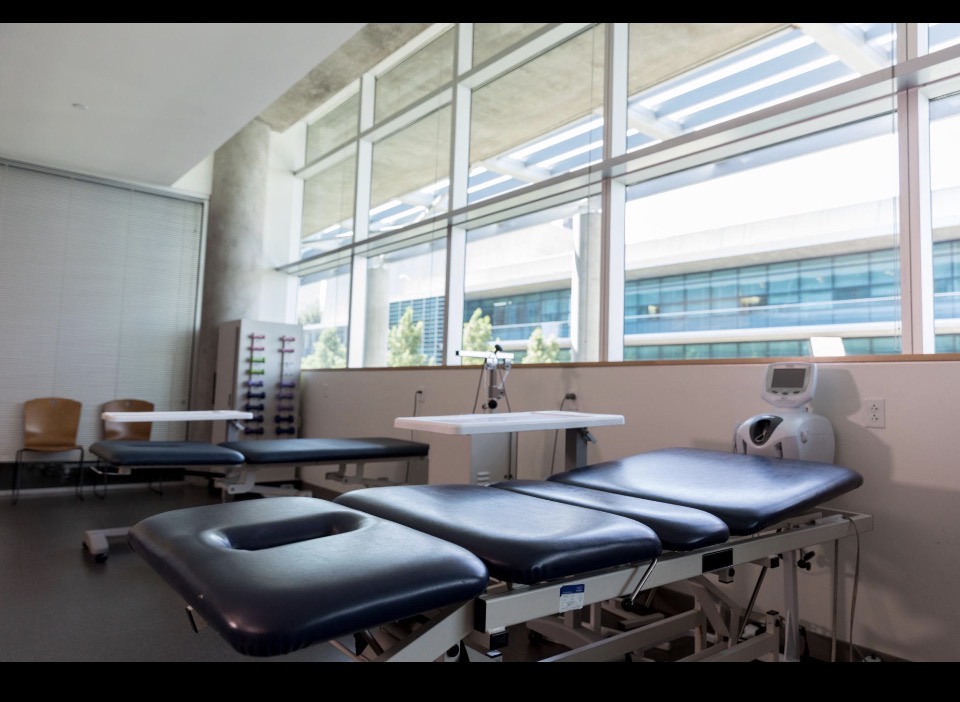
Demand for services at this location continues to grow, and the clinic is beginning to approach the limits of its current capacity. Schedules are full, wait times can extend, and the opportunity to serve additional residents is naturally influenced by available space, staffing, and broader system priorities.
That reality doesn’t point to a single prescribed solution — but it does highlight something worth recognizing.
The Seven Hills model is working.
It is working for residents, who gain convenient access to high-quality care close to home. It is working for the City, which has created a destination that supports health, independence, and community engagement. And it is working for University Hospitals, which has established a strong presence in a setting that fosters patient connection, continuity, and trust.
This is, at its core, a truly symbiotic partnership.
Jenn Burger, Recreation Director for the City of Seven Hills, reflected on the effort that helped build the partnership into what it is today: “When I first took over as Director, I was told there was no way we could make this work. But the administration on both ends pushed through major obstacles and made it happen. Over the years, we redesigned space, came up with out-of-the-box ideas, and kept both sides of the arrangement working together successfully. The therapists here have become part of the fabric of our recreation center.”
The City provides the environment — accessible, familiar, and rooted in community life. University Hospitals brings the clinical expertise, systems, and standards that ensure high-quality outcomes. Together, they have created something that neither could fully achieve on its own: a model where healthcare is not separate from daily life, but seamlessly integrated into it.
As demand continues to evolve, there may be opportunities over time to thoughtfully assess how this model can continue to meet the needs of the community — whether through adjustments in scheduling, staffing, or physical space. Any such decisions, of course, will be guided by the broader priorities and strategic direction of University Hospitals.
What this article seeks to highlight is not a directive, but a reality: the foundation that has been built here is strong, and the response from the community has been equally strong.
From a community perspective, maintaining — and where appropriate, enhancing — access to this level of care would only deepen the benefits already being realized, helping more residents recover, remain active, and stay independent.
Years ago, the City of Seven Hills made a forward-looking investment by welcoming University Hospitals into a community-centered space. In return, University Hospitals has delivered a level of care that has become an integral part of the community’s health and identity.
That kind of partnership is rare — and worth continuing to nurture.
Because when institutions and communities work together effectively, the result is something greater than either could accomplish alone: a stronger, healthier community for everyone.
And for residents like me — and others working toward the same goal — it’s the difference between thinking about pain with every step and simply getting back to living.
Frequently Asked Questions
